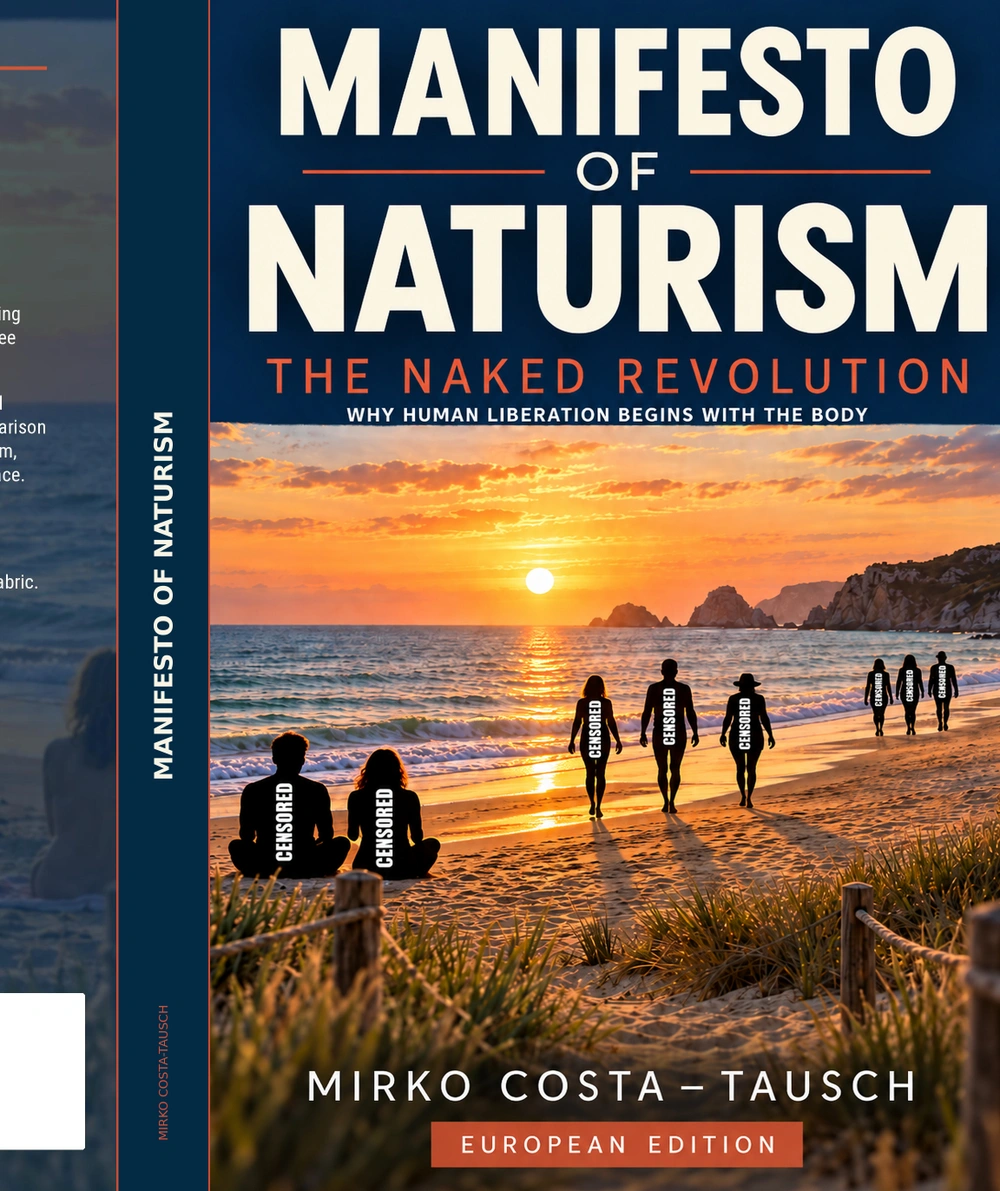
European Edition · 2026
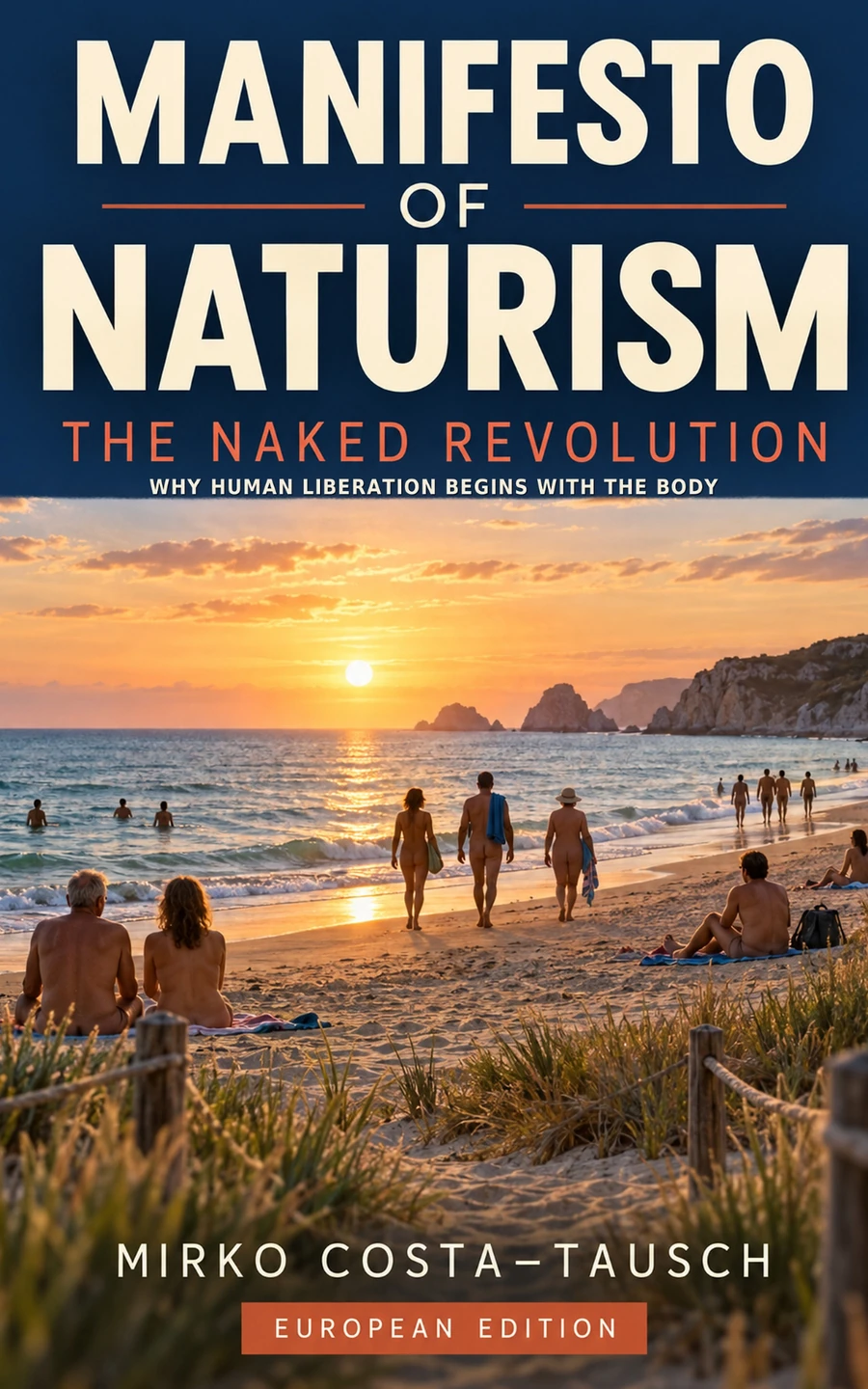
MANIFESTO OF NATURISMThe Naked Revolution · Why Human Liberation Begins with the Body
Why should the simple act of being comfortable in your own skin need defending? Travel through Europe’s history, laws and changing ideas of decency — and discover a compelling case for the freedom to choose. A thought-provoking book for naturists and anyone who values personal liberty.
“This book does not demand a naked world. It demands a free one.”
⚖
LAWLaws, judgments, European comparison
▥
HISTORYFrom antiquity to today
●●●
CULTURESociety, body image, equality
◒
REFORMHuman rights demand & modern law
European Edition
Choose your English edition
All currently published English editions are available below. The lower-priced black-and-white paperback on Amazon.com is intended as an affordable edition for readers in the USA and worldwide. The Kindle, hardcover and budget black-and-white paperback use the censored cover required for those editions.
Paperback · Worldwide
A lower-priced black-and-white Amazon.com edition for readers in the USA and worldwide.
Amazon.com · B0HLYFHQW9 →BOOKS FOR A FREER WORLD
Books worth discovering. A world worth seeing differently.
A good book can change the way you see something familiar. These books invite you to look again at the human body — through ideas, personal experience, travel and the extraordinary diversity of world cultures.
The book that started it all
MANIFESTO OF NATURISM
Why does a body seem entirely ordinary in one place and scandalous in another? History, religion, European law and everyday naturism come together in an argument for the right to choose — without confusing nudity with sexuality or freedom with disregard for others.
Explore the editions →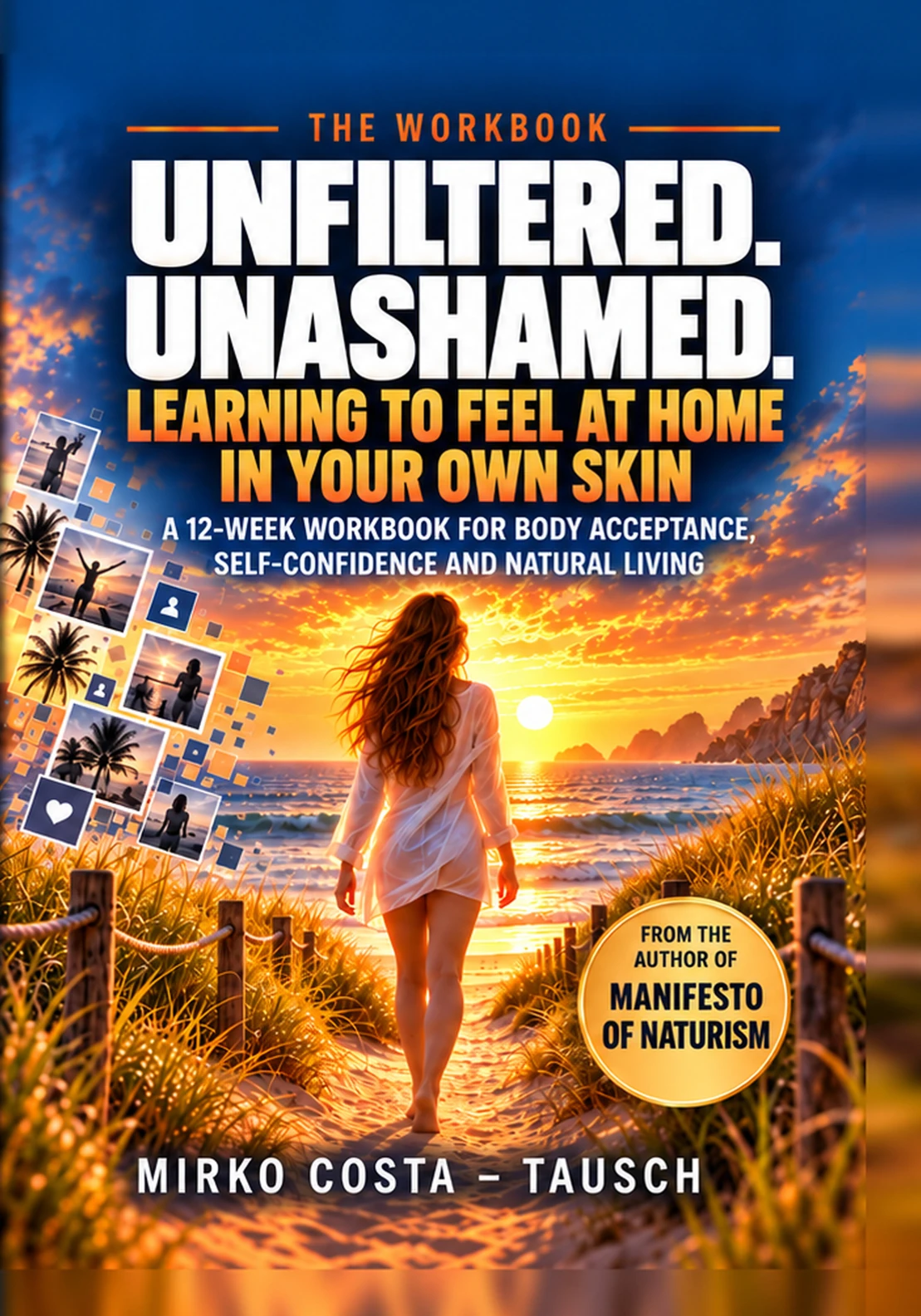
Available in English · also in German, Italian, French and Spanish
UNFILTERED. UNASHAMED.
Learning to Feel at Home in Your Own Skin
What if your body did not have to pass a daily inspection? Across twelve thought-provoking chapters, this practical workbook examines beauty standards, social media filters, industries built on insecurity, the inner critic and the fear of being seen. Guided reflections explore body neutrality, what your body can do, mirror habits, natural body diversity and the freedom to make your own choices. Exercises and weekly challenges turn reading into personal discovery — at your own pace.
Explore the 12-week workbook →2027 · NATURIST TRAVELNAKED
ACROSS
EUROPE
ACROSS
EUROPE
2027 · The discerning naturist traveller’s guide
NAKED ACROSS EUROPE 2027
The beach might be beautiful — but is it a place where you can truly relax? This is a guide for travellers who want more than a pin on a map. It looks closely at naturist beaches, distinctive villages, resorts, hotels and textile-free wellness across Europe, weighing freedom, privacy, safety, atmosphere, service and value. Its own book jury recognises exceptional destinations through seven awards. Think of the critical spirit of a Michelin-style guide, applied to naturist holidays — without any association with Michelin.
Explore the travel guide →HISTORY · LAW · CULTUREWORLD
ATLAS OF
NATURISM
ATLAS OF
NATURISM
An ambitious international work
THE WORLD ATLAS OF NATURISM
Body Freedom, Law and Culture Around the Globe
Why have human societies drawn such different boundaries around the same human body? This monumental, scholarly two-volume project follows the history of nakedness from deep time and the earliest civilisations through religion, colonial encounters and the rise of modern naturism. It then compares laws, social norms, topfree equality, bathing cultures and bodily autonomy around the world. A global journey that brings history, anthropology and law into one remarkable conversation — and asks what freedom of choice might mean for the future.
Discover the World Atlas →HOLIDAY · PLAYPUZZLES
& QUIZZES
& QUIZZES
Beyond the bookshelf
Naturist holiday puzzles & quizzes
A playful way to take curiosity on holiday: puzzles, questions and discoveries inspired by naturism, travel and culture. A book idea to look forward to.
STORIES · SEA · FREEDOMA LOVE
STORY
STORY
Stories to come
A love story on a naturist beach
Sun, sea and an unexpected encounter — a future novel exploring human connections against the setting of a naturist beach.
BOOKS FOR A FREER WORLD · 2027
A guide with a point of view — not another endless directory.
NAKED ACROSS EUROPE 2027TRAVEL
AWARDS
EUROPE
AWARDS
EUROPE
Beyond lists of beaches: hand-picked European naturist escapes, searching reviews and a book jury’s awards — a discerning guide to where freedom and a great holiday really meet.
Some beaches are spectacular yet impractical. Some resorts promise tranquillity but disappoint. Others, little known, offer precisely the atmosphere, welcome and freedom a traveller hopes to find. Naked Across Europe 2027 asks the question that matters: Would this be a holiday worth taking?
From naturist coastlines and villages to carefully considered resorts, hotels and textile-free wellness, the book looks at the things glossy brochures often leave out: access, local rules, safety, privacy, value for money, food, environmental care and the experience of different travellers. Families, solo guests and adults seeking peace are considered with their own needs in mind.
Drawing on the principles of MANIFESTO OF NATURISM, it treats non-sexual naturism, consent and bodily freedom as real quality criteria. A dedicated book jury awards distinctions to outstanding European naturist destinations across seven competitions. The ambition is to bring the discerning, critical approach of an excellent restaurant guide to naturist travel.
- Beaches, naturist villages, resorts and hotels
- Textile-free wellness, thoughtful recommendations and quieter discoveries
- Access, facilities, rules, value and clear safety information
- Seven book-jury awards for outstanding destinations
A world history of the human body
THE WORLD ATLAS OF NATURISM
Body Freedom, Law and Culture Around the Globe
From ancient bathing cultures and religious meanings to colonial dress codes, modern naturist movements and today’s debates over bodily autonomy, The World Atlas of Naturism approaches a deceptively simple question on an extraordinary scale: how has the world learned to see the uncovered human body?
Conceived as a substantial, two-volume work, it combines global history with comparisons of law, culture and lived practice. Its aim is not to celebrate one universal way of life, but to illuminate the remarkable variety of human experience — and build a carefully sourced argument for the freedom to remain covered or to uncover.
12 chapters · 12 weeks · your own pace
UNFILTERED. UNASHAMED. — A new way to look at yourself
Who decided what a ‘normal’ body should look like? And how much of that judgement is truly your own? This engaging workbook offers a route from constant self-scrutiny towards curiosity, respect and a more grounded relationship with the body you live in.
- Unpick beauty ideals, social media feeds and the business of insecurity.
- Recognise the inner critic, rethink comparisons and explore body neutrality.
- Look beyond appearances: body function, scars, size, hair and the reality of human variety.
- Try gentle mirror reflections, optional exercises around nudity and weekly steps towards personal choice.
Available in English, German, Italian, French and Spanish. Portuguese and Dutch translations are in preparation.
An evidence-informed book for personal reflection; not a substitute for psychological treatment. Naturism is an option, never an expectation.
European Edition
What this European Edition explores
A good book can change the way you see something familiar. These books invite you to look again at the human body — through ideas, personal experience, travel and the extraordinary diversity of world cultures.
History of nudity and naturism
From antiquity and religious traditions to modern reform movements, the book follows how Europe learned to read the naked body as natural, shameful, political or liberating. Seeing that history changes the question from “is nudity normal?” to “who taught us what normal means?” Read the argument in the book.
Culture and religion
Christianity, secularisation, regional customs and changing moral codes have shaped very different European attitudes to the body. The book does not flatten those traditions; it shows their tensions, contradictions and lasting influence on everyday life. Read the argument in the book.
Law and European legal comparison
A beach, park or sauna can feel culturally similar across borders while the legal framework is radically different. The European Edition compares rules, enforcement and legal uncertainty so readers can understand why peaceful nudity is tolerated in one place and sanctioned in another. Read the argument in the book.
Naturism, nudism and FKK
These words overlap, but they carry different histories and social meanings. The book traces organised naturism, FKK culture and contemporary nude recreation — and asks what is lost when non-sexual nudity is automatically treated as sexual. Read the argument in the book.
Non-sexual nudity
A naked body is not, by itself, a sexual act. This distinction runs through the book because confusing nudity with sexual conduct can distort law, social norms and personal boundaries. The argument is for clarity, consent and context. Read the argument in the book.
Topless equality
Why can the same amount of visible skin be treated differently depending on sex? The book examines topless rules and social practice as a concrete test of equal treatment, while also considering changing customs and the right not to undress. Read the argument in the book.
Sauna and bathing culture
From textile-free saunas to swimwear rules and mixed traditions, bathing culture reveals how quickly the same body can be considered ordinary in one setting and improper in another. The comparison makes familiar habits suddenly visible — and worth questioning. Read the argument in the book.
Bodily autonomy
The central claim is choice: the freedom to dress and the freedom to undress, without coercion in either direction. The manifesto develops bodily freedom as a political and human-rights demand; it does not claim that a general positive-law “human right to nudity” already exists. Read the argument in the book.
Shame and prudery
Shame can protect intimacy, but it can also be taught, commercialised and weaponised. The book asks where personal modesty ends and social control begins — a question that becomes difficult to ignore once you see how differently Europe draws the line. Read the argument in the book.
Legal clarity for naturist spaces
Freedom works best when expectations are clear. The book argues for understandable rules, accessible naturist spaces and legal frameworks that distinguish peaceful nudity from harmful conduct instead of leaving citizens to guess. Read the argument in the book.
Protection from harassment and discrimination
Naturism is not permission to stare, touch, photograph or harass. Consent, privacy and personal boundaries are essential. The book connects freedom with responsibility and asks for protection that targets harmful behaviour rather than the unclothed body itself. Read the argument in the book.
7 languages
Books
All seven language editions are now published.
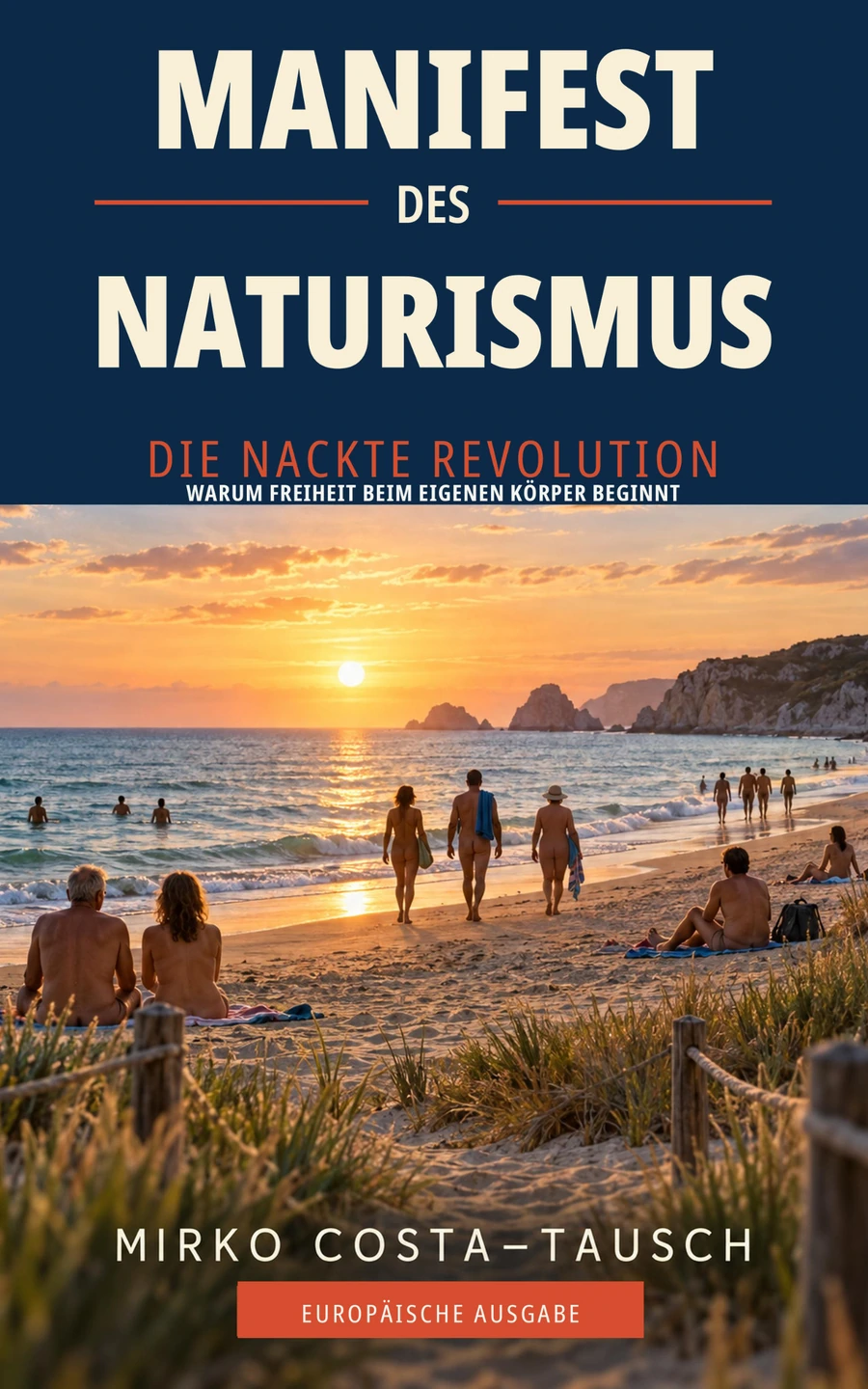 DeutschEuropäische Ausgabe
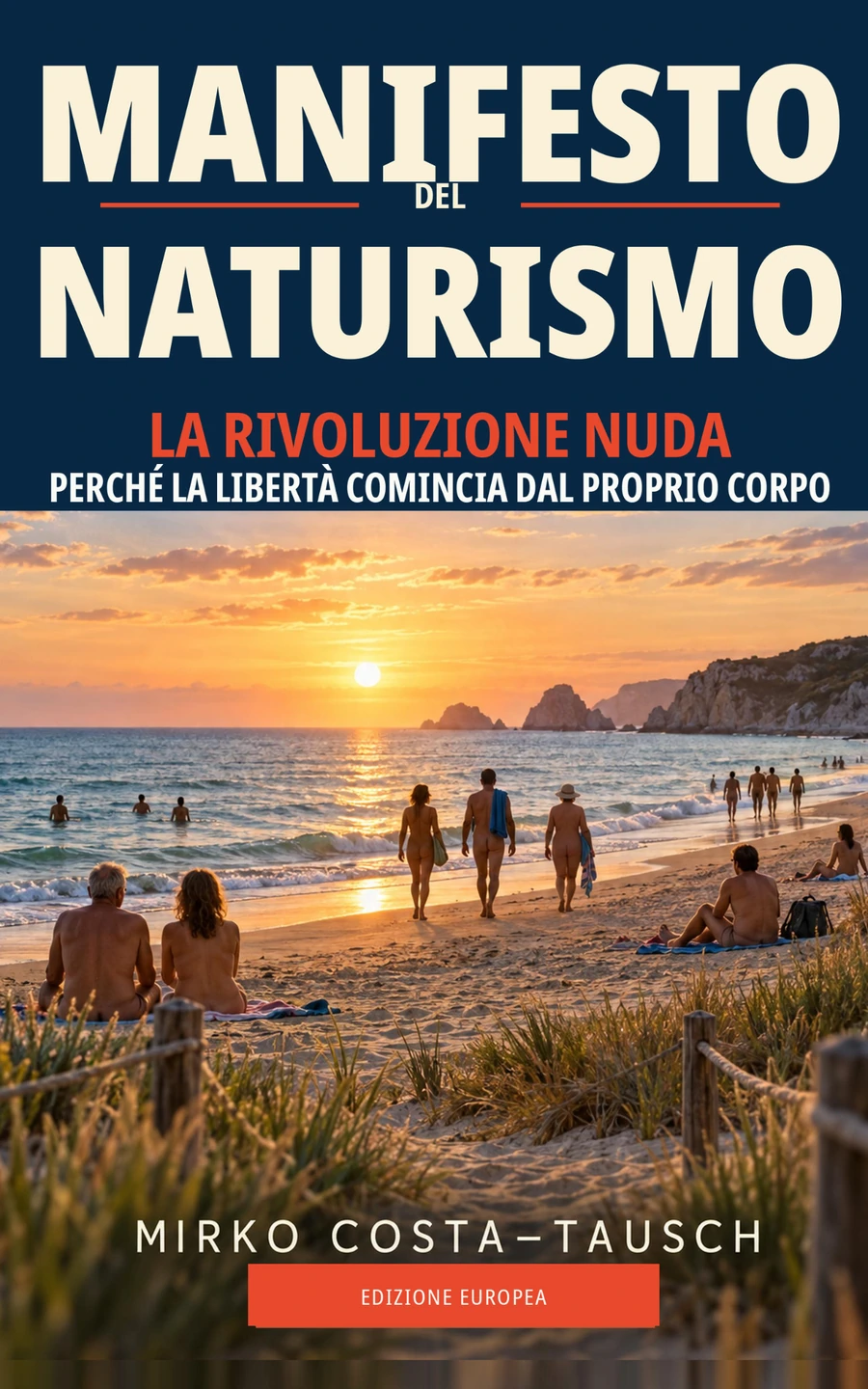 ItalianoEdizione europea
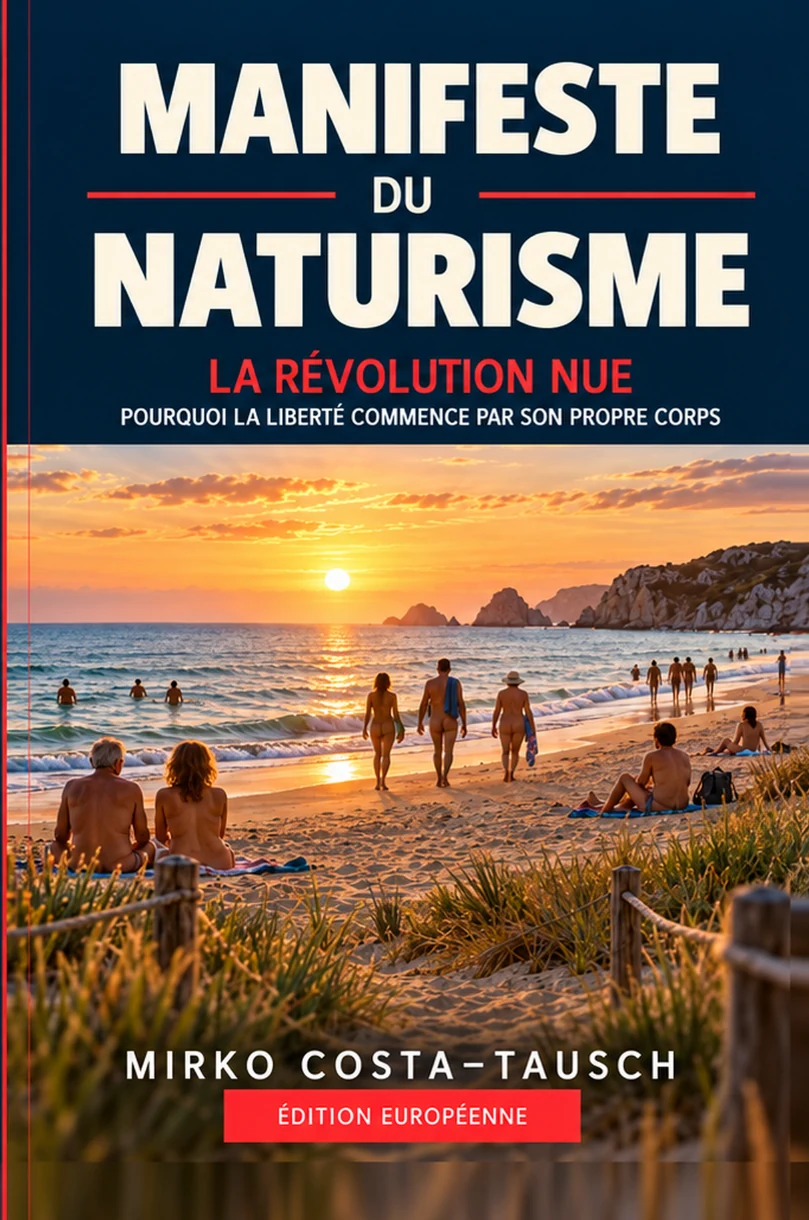 FrançaisÉdition européenne
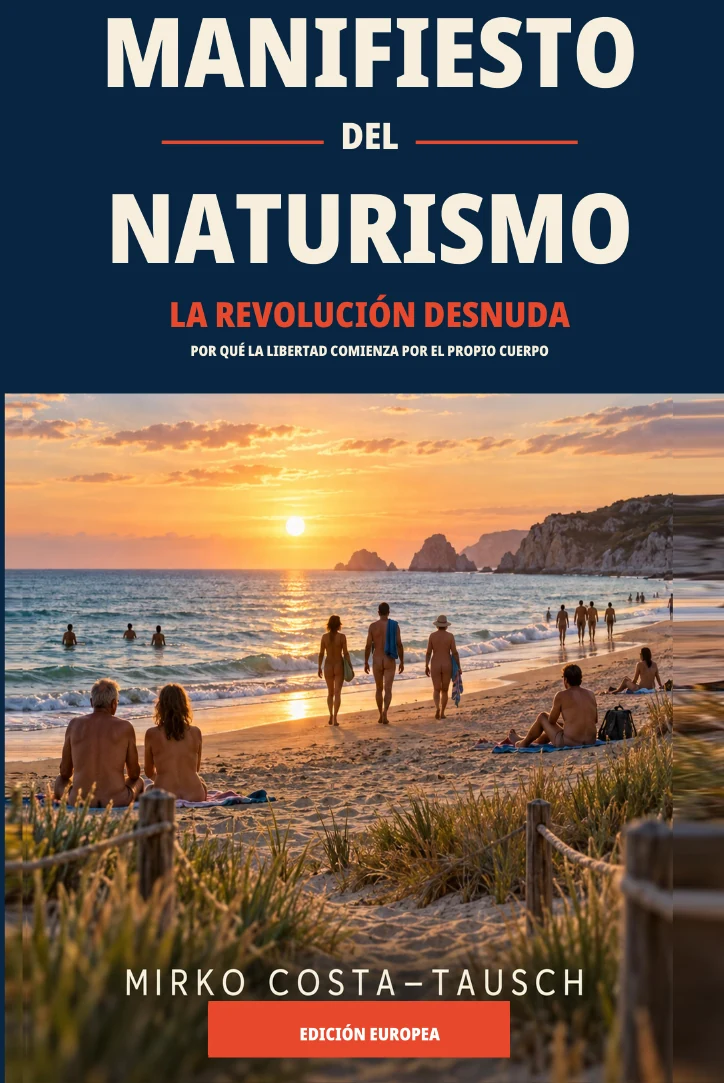 EspañolEdición europea
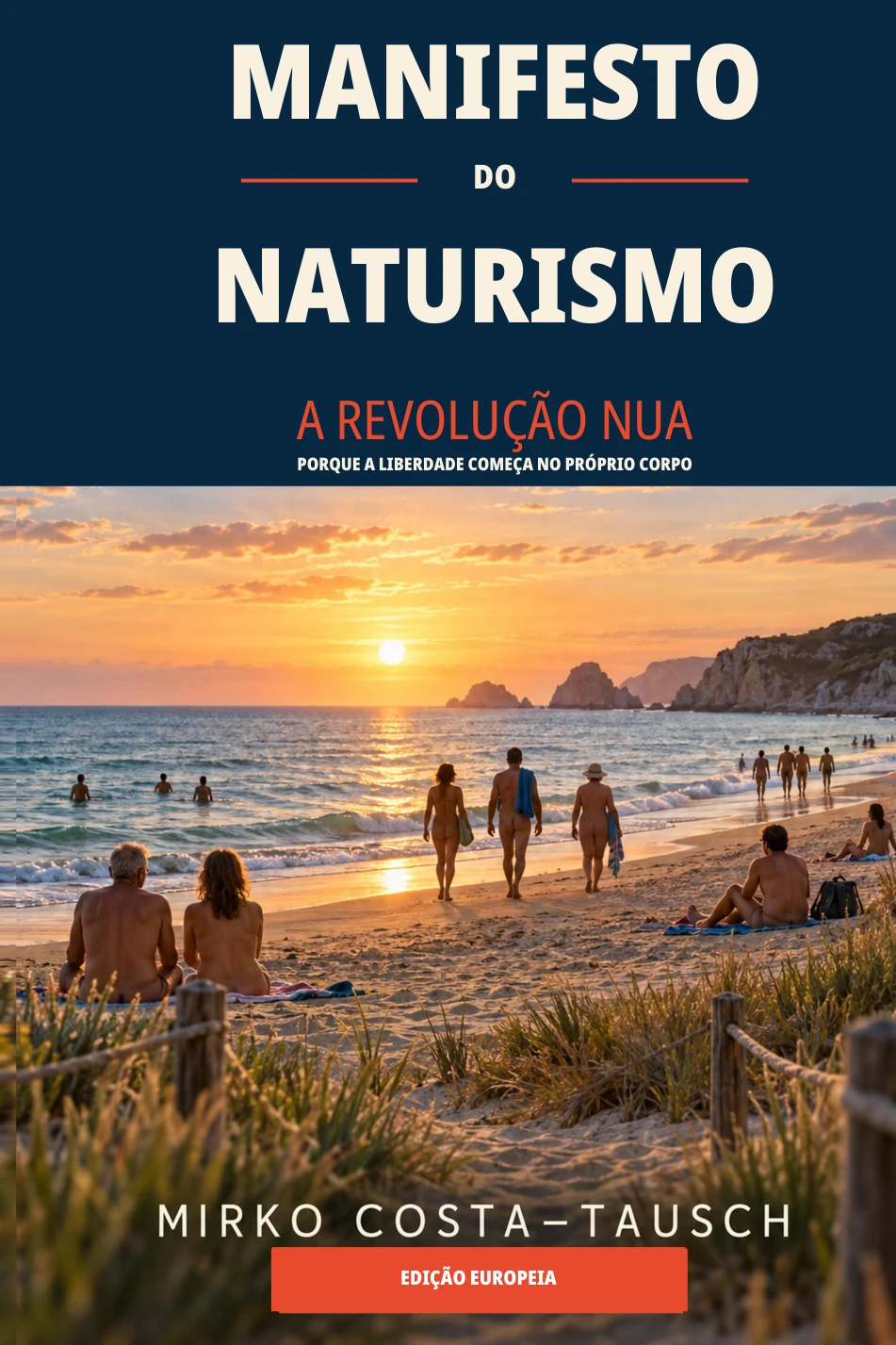 PortuguêsEdição europeia
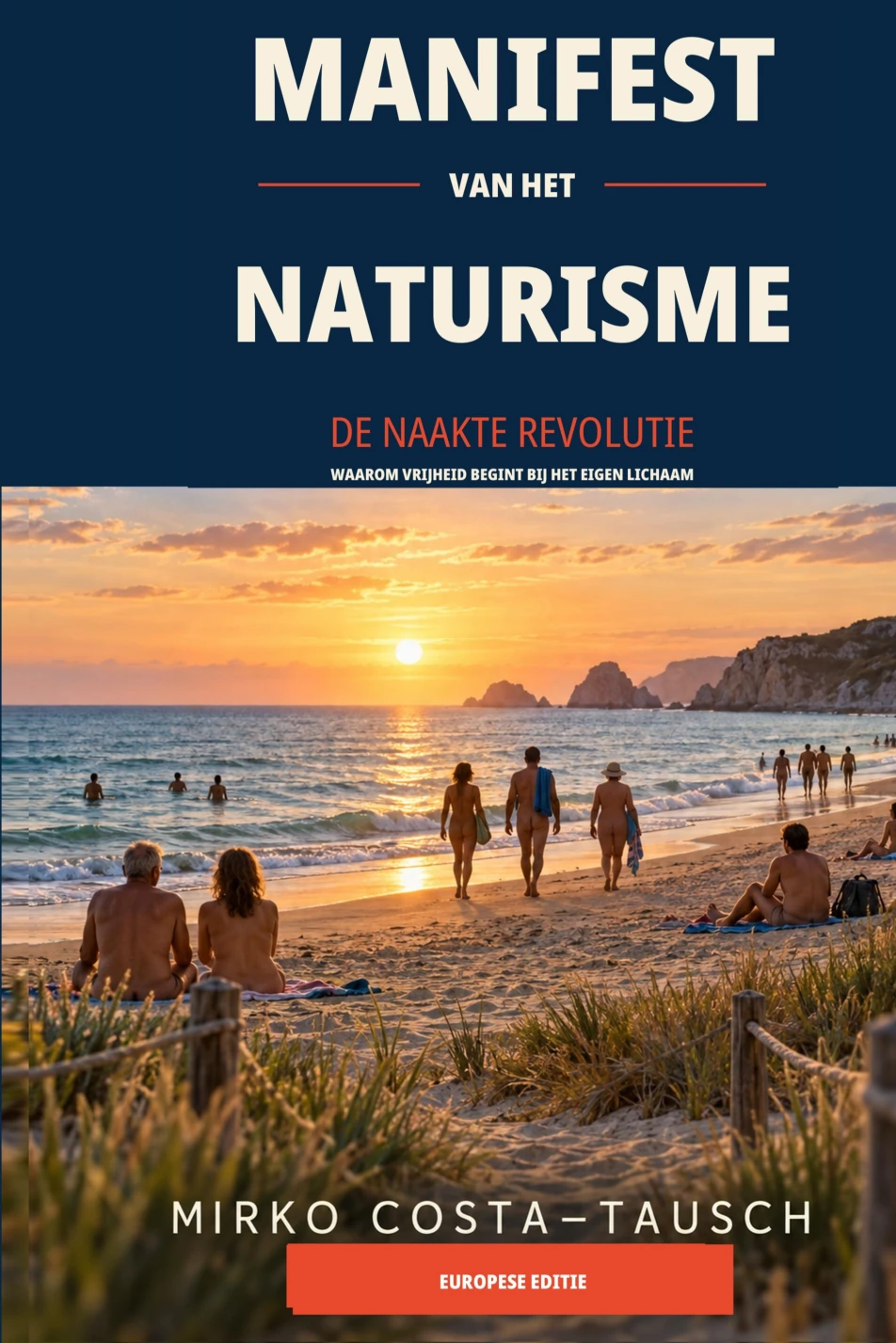 NederlandsEuropese editie
This book does not demand a naked world. It demands a free one.
Important: The manifesto elevates the freedom to choose whether to be clothed or unclothed – in whatever form – to a political and human rights demand. It does not claim that a universal ‘human right to nudity’, enshrined in positive law and applicable equally to all countries, is already recognised; rather, it calls for its recognition.